We believe padel is for everyone. But there is nothing wrong with a little friendly competition to get the blood pumping!
If you’re looking to elevate your game, here are some tactics to help you outsmart your opponents, written by padel experts in Glasgow.
Why padel tactics matter more than technique
Every racket sport rewards tactics, but padel rewards them more than most.
The small court, the walls, the doubles format, the slower ball. All of these reduce the gap between a powerful player and a clever one.
A well-timed lob can turn a losing rally into a winner. A shot into the middle of the court can break down two players who don’t communicate.
Playing padel well isn’t about hitting the ball harder. It’s about putting your opponent in the worst possible position and staying in yours.
Good padel tactics for beginners are often the same ones the pros use, just with simpler execution.
The tactic is the same.
The three zones of the padel court
Before any tactic makes sense, you need to understand the three zones of a padel court.
Zone one: The net (attacking position)
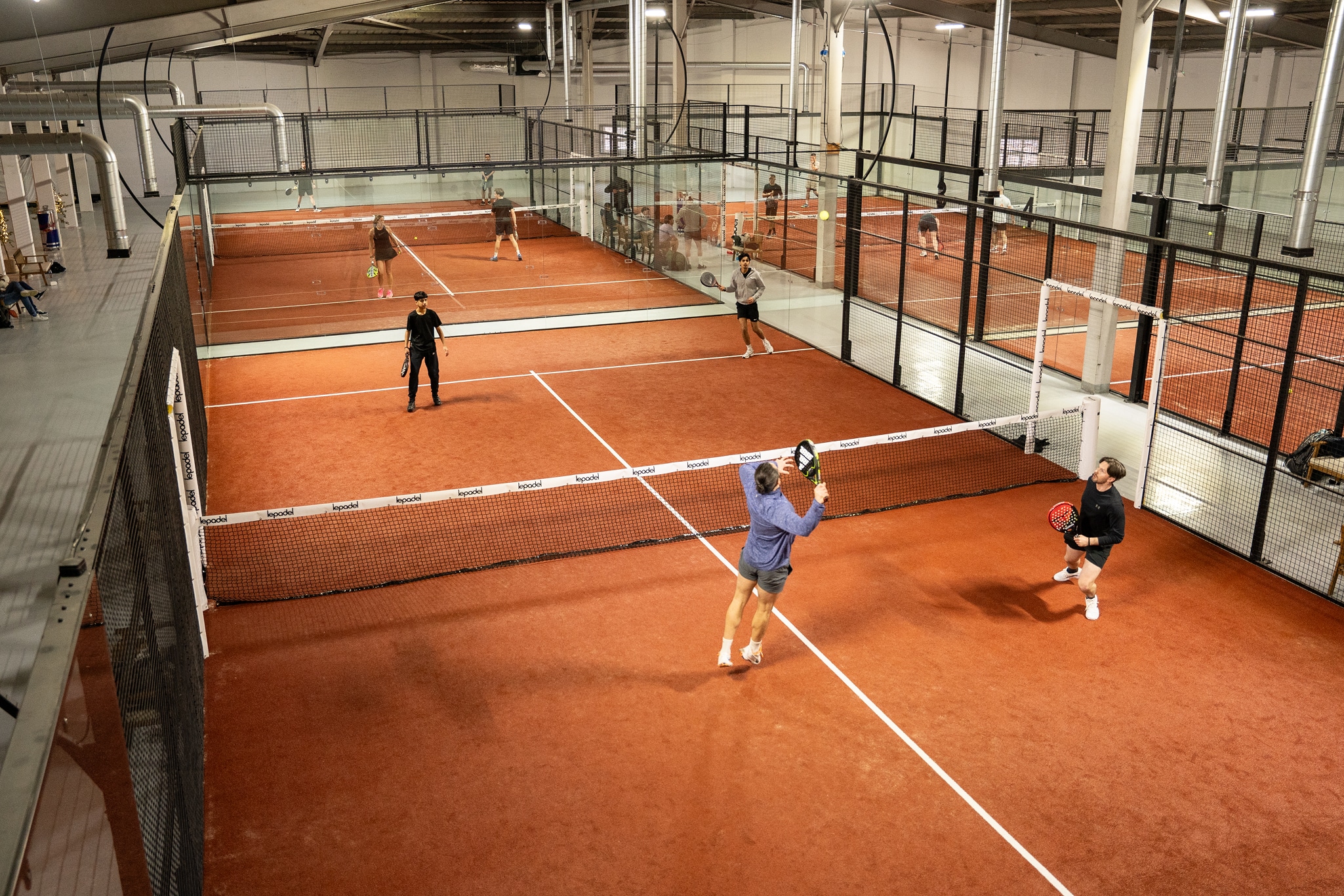
The attacking position is at the net with your partner, both of you standing about a metre behind the service line when returning, closing to within a metre of the net when on the offensive.
This is where you want to be.
At the net, you hit volleys down at your opponents’ feet, you can finish points with a smash, and the incoming ball comes to you faster than you can defend from the back.
The team that holds the net wins roughly 70% of rallies at every level from beginner to pro.
Your whole tactical goal in most rallies is to get to the net and stay there.
Zone two: No-man’s land (avoid)
The middle of the court between the service line and the back glass is no-man’s land.
Stand here and you’re too far from the net to volley effectively, too close to the back wall to play proper defensive shots, and the ball bounces at awkward heights around your knees and hips.
Get out of no-man’s land by either pushing forward to the net or dropping back to the baseline, depending on what the incoming ball is doing.
Zone three: The back of the court (defensive)
The back of the court, within a metre of the back wall, is where you play defensively.
From here, you use the back glass, let the ball bounce and come off the wall before hitting a controlled shot back, and you try to engineer an opportunity to lob your opponents off the net.
Defensive tactics in padel are about patience, not desperation.
A team pinned to the back can absolutely win rallies if they’re willing to wait for a weak ball to attack.
The lob, the most important padel shot and tactic
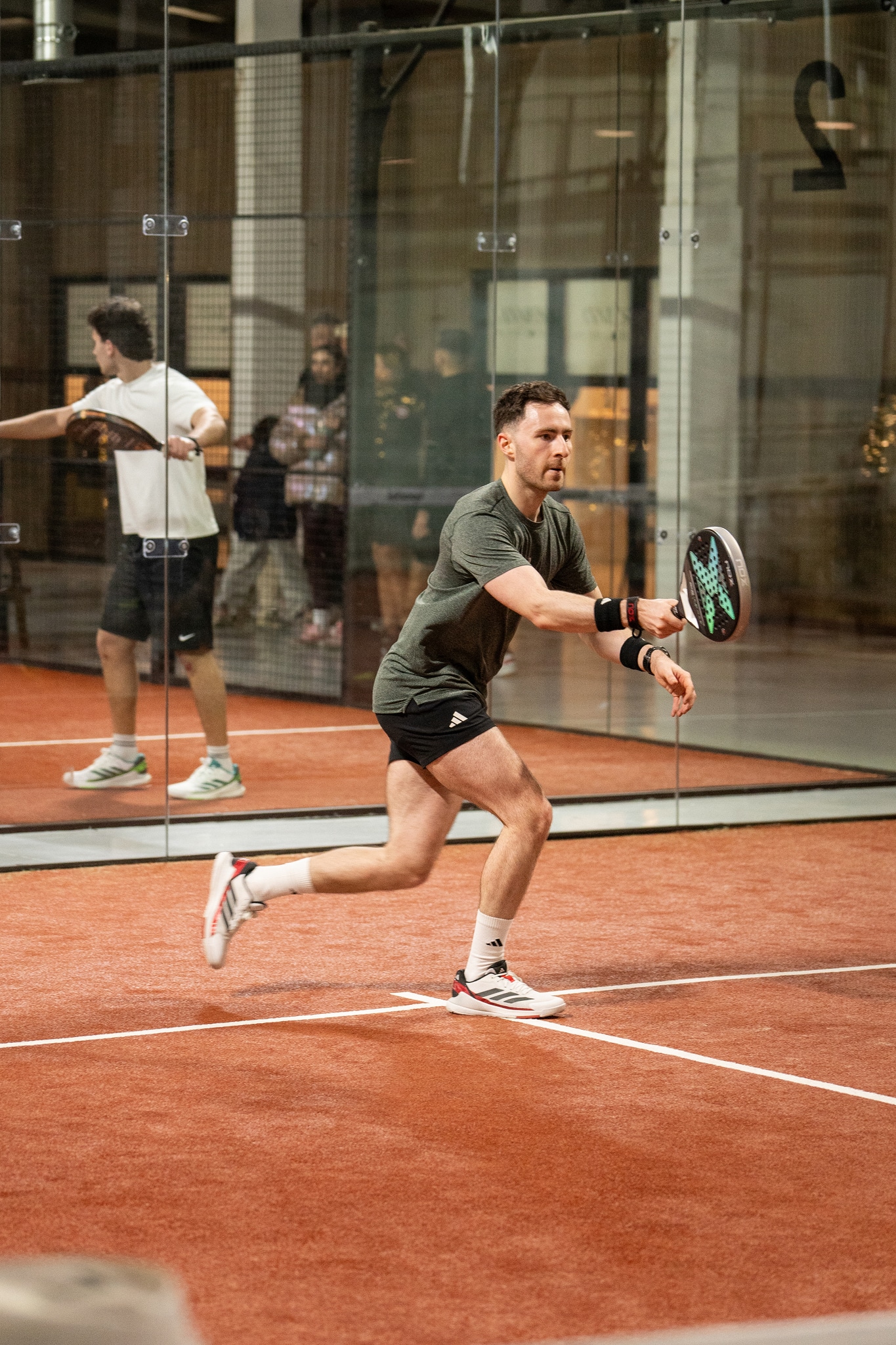
If you only learn one shot in padel, learn the lob.
A well-hit lob over the head of an opponent at the net forces them back, resets the point, and very often flips you from defensive to attacking position in a single shot.
Hitting a lob in padel is a matter of angle rather than power.
You want the ball to arc high enough to clear your opponent’s racket reach, and land deep enough that they have to retreat into the back of the court to deal with it.
The lob takes away your opponent’s net position.
Every time you hit a good lob and your opponent has to chase it to the back wall, you gain two things. Time to move forward yourself, and be a defensive opponent instead of an attacking one.
Aim your lobs cross-court rather than down the line, because cross-court gives more margin and more distance for the ball to arc.
The bandeja, padel’s signature defensive shot
The bandeja is the shot that separates padel from tennis tactics.
It is a controlled overhead played while you’re at the net, used to return a lob that isn’t quite high enough to smash but is too high to volley.
You hit it with a slicing motion, sending the ball back deep and low into your opponents’ half while keeping your own position at the net.
The tactical point of the bandeja is that it lets you answer a lob without sacrificing your attacking position.
A bad response to a lob is to smash it (risky, easy to miss) or to let it bounce and retreat (you give up the net). The bandeja is the middle answer.
It’s strategic, controlled, and gives your partner time to hold position.
Beginners often don’t even know this shot exists. Once you learn it, you’ll use it constantly.
Beginners attacking tactics to win the point at the net
Once you’re at the net with your partner, you’ve got three main tactics to win the point.
Volley at the feet
Your volley target should be at your opponent’s feet, not their body or a clean corner.
A ball volleyed at the feet forces a low, defensive return that you can attack again.
Volleys played at head height are easier to read and return. Volleys at the feet are ugly to deal with and keep you in attacking position.

Smash with purpose, not power
When the lob comes short and high enough to smash, the beginner’s instinct is to hit it as hard as possible.
Resist that.
A controlled smash aimed at the side wall or the back glass at the right angle is far harder to return than a flat power smash.
You’re not trying to win with speed, you’re trying to win with angle.
Hit to the middle of the court
When in doubt, hit down the middle of the court between your two opponents.
The middle ball exploits the space between them and causes confusion about whose turn it is, often ending with both players freezing or both going for it and colliding.
Double teams with weak communication fall apart on middle balls.
At beginner and intermediate levels, you’ll win a surprising number of points simply by aiming down the middle rather than going for a clean winner at the line.
Defensive tactics by playing padel at the back of the court
When you’re stuck at the back, don’t panic.
Defensive padel is a skill, and a patient defensive team beats an impatient attacking team more often than you’d think.
Use the back glass
The back glass is your friend.
Let the ball bounce on the ground first, then come off the back wall, then hit it. This gives you time to set up, line up a controlled shot, and usually send back a lob or a deep drive.
Wait for the ball. Read the bounce. Hit a shot that either resets the rally or pushes your opponent back.
Lob your way back to the net
The classic defensive-to-attacking move is the back-wall lob.
You catch the ball off the back glass, arc it over your opponents’ heads, and use the time to advance to the net while they chase.
Get good at this one and you’ll never feel trapped at the back again.
Target the weaker player
When defending, send every ball at the weaker opponent’s backhand.
It sounds obvious, but in social padel most beginners play 50/50 without thinking about it.
Deliberately targeting the weaker side of the opposing pair concentrates pressure and forces errors.
The fridge, padel’s famous doubles tactic
If your opponents ask about one tactic during a match, it’ll be the fridge.
The fridge tactic in padel means isolating the weaker of the two opposing players by feeding them every single ball, while ignoring their partner entirely.
The name comes from the idea that the other opponent is left “in the fridge”, frozen, cold, and getting no touches.
They lose rhythm, they lose focus, and by the time you actually do hit one to them, they will be least expecting it.
The fridge works because padel is a rhythm sport.
When they finally do get a ball, they’re underprepared.
Meanwhile, the weaker opponent you’re targeting gets worn down by having to handle every incoming ball alone. It’s ruthless, it’s legal, and at club level it works every time.
Counter-tactic with the fridge
Find yourself being frozen out? There are ways around this too.
Make yourself available.
Move across to poach volleys even if they weren’t aimed at you. Tell your partner to angle balls back that bring you into the rally.
The fridge only works if you let it.
Communication and partner play
Padel is a doubles sport.
Communication makes the difference between a pair that wins and a pair that argues on the third bench.
A few rules that we drill into every new partnership at our padel community sessions.

Call “mine” or “yours” early
Tell your partner before the ball arrives, not as you’re both swinging.
A clear “mine” or “leave” in the second half of your opponent’s swing is enough to avoid the collision or the double-hit.
Stay shoulder to shoulder
Move up and back as a pair, not as two individuals.
If your partner is pulled to the back glass to defend, you should drop back too, not hang on at the net alone.
This keeps the gap between you consistent and stops opponents from hitting through the middle.
Talk between points
Quick one-sentence reads between points are how good partnerships beat better individual players. ”
Her backhand is weaker, go there.” “He’s slow to the lob, let’s lob cross-court more.” “We’re losing the middle, let’s shift one metre left.”
Tell your partner what you see, ask what they see.
A partnership that talks improves during the match. One that doesn’t gets worse.
Reading opponents to win the match
Good padel tactics adapt. The first three or four games of any match are scouting. You’re watching for:
Weak backhands
If either opponent hates their backhand or runs around it to play forehand, aim at the backhand side relentlessly until they prove they can deal with it.
Reluctance to move
Someone isn’t chasing lobs very well? Lob some more!
Weak overhead
If someone can’t hit a clean bandeja, keep the lobs coming.
Poor communication
If they look at each other before middle balls, hit more middle balls.
Keep adapting
Adapt as the match goes on.
A tactic that worked in the first set sometimes stops working because they adjust. Shift. Try the opposite. Good padel is a conversation with your opponents, not a single game plan played on repeat.
Take these padel tactics onto court
Padel is whatever you make of it. A fun social sport, a fierce competitive outlet, or both at once.
But if you looked this up, chances are you’re after the latter.
Pick two or three tactics from this guide and focus on them in your next session. Ignore the rest until those feel second nature. The players who improve fastest at our club are the ones who work on one thing at a time, not the ones trying to implement everything at once.
And when you need somewhere to practise, we’re here.
Book a court or explore our membership options for regular play at The Court in Glasgow.